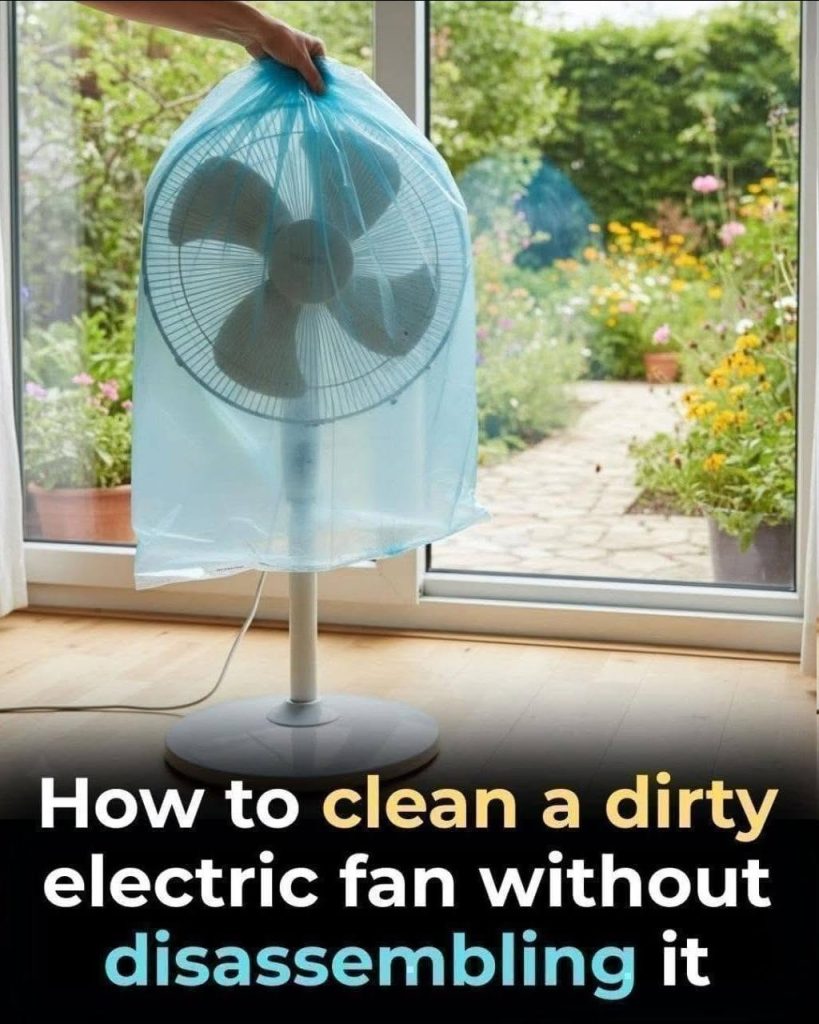
How to Clean a Fan Without Taking It Apart: A Simple and Safer Method
What If the Fan Starts Making New Noises?
Rattling, grinding, scraping, buzzing, or clicking that was not present before can indicate loose components, blade contact, bearing problems, or internal wear.
Cleaning may remove debris that is brushing against the grille, but persistent mechanical noise should not be ignored.
Stop using the fan if the sound suggests something is loose or damaged.
What If the Fan Shakes or Wobbles?
A fan that suddenly vibrates excessively may have uneven dust buildup, a bent blade, a damaged grille, a loose base, or another mechanical problem.
Cleaning visible buildup can sometimes improve balance, but do not attempt to bend blades or modify the motor shaft yourself.
If wobbling continues, follow the manufacturer’s service recommendations.
Check the Power Cord While Cleaning
Cleaning time is also a good opportunity to inspect the power cord.
Look for cracking, fraying, exposed wires, damaged insulation, or a loose plug.
Do not tape over serious electrical damage and continue using the fan.
A damaged power cord can create shock or fire risks.
Inspect the Plug
Check whether the plug looks discolored, melted, cracked, or unusually warm after use.
Any sign of heat damage deserves attention.
Do Not Pull the Plug by the Cord
When unplugging the fan, hold the plug itself rather than pulling on the cord.
Repeatedly yanking the cord can weaken the connection over time.
Keep Fans Away From Water
Do not position a standard household fan where it may be splashed by sinks, bathtubs, showers, pools, or outdoor rain unless the appliance is specifically designed for that environment.
Electrical appliances and water are a dangerous combination.
Bathroom Fans Are Different
A portable fan used in a bathroom should be treated according to its specific electrical safety rating and manufacturer guidance.
Do not assume a standard bedroom fan is safe simply because the room feels humid.
Outdoor Fans Need Special Care
If a fan is designed for outdoor use, its cleaning and weather-resistance specifications may differ from indoor appliances.
Follow the product instructions rather than applying an indoor cleaning routine automatically.
Should You Remove the Grille Eventually?
There comes a point where cleaning through the grille is no longer practical.
If thick grime covers the inner blades, hair is wrapped around internal parts, or greasy buildup is inaccessible, a proper deep cleaning may require removing the grille.
Only do this if the manufacturer provides instructions for safe disassembly and reassembly.
Why Manufacturer Instructions Matter
Fans vary significantly in construction.
Some grilles are held by clips, others use screws, and some are not intended to be removed by the user.
Different plastics and finishes also tolerate different cleaners.
The manual is therefore the best source for model-specific cleaning instructions.
Do Not Force Clips or Screws
If a grille is difficult to remove and the manual does not clearly explain how to do it, do not pry it open with a screwdriver or knife.
Breaking a clip or deforming the grille can make the fan unsafe to operate.
When Professional Servicing Makes Sense
Professional inspection may be appropriate when the fan has internal grease buildup, electrical damage, overheating, sparking, unusual motor noise, a damaged cord, or inaccessible internal debris.
For inexpensive fans, replacement may sometimes be more practical than complicated repair, but electrical faults should never be ignored.
Can Cleaning Improve Airflow?
Yes, in some cases.
Heavy dust can partially obstruct grille openings and coat blade surfaces.
Removing that buildup can help the fan move air more freely.
However, if airflow remains weak after cleaning, the problem may involve the motor, speed controls, blade design, or normal wear rather than dust alone.
Can Cleaning Make the Fan Quieter?
If loose dust, hair, or debris is brushing against moving parts, cleaning may reduce some noise.
But grinding, buzzing, or bearing noise usually requires more than surface cleaning.
Do Fan Blades Need to Be Perfectly Spotless?
No.
If reaching a small amount of dust requires forcing tools deep inside the appliance or using excessive moisture, it is safer to leave the area alone until proper disassembly can be performed.
The goal is practical maintenance, not risking damage in pursuit of a perfectly polished blade.
How to Keep the Area Around the Fan Cleaner
