The Egg Yolk That Stopped Me in My Tracks
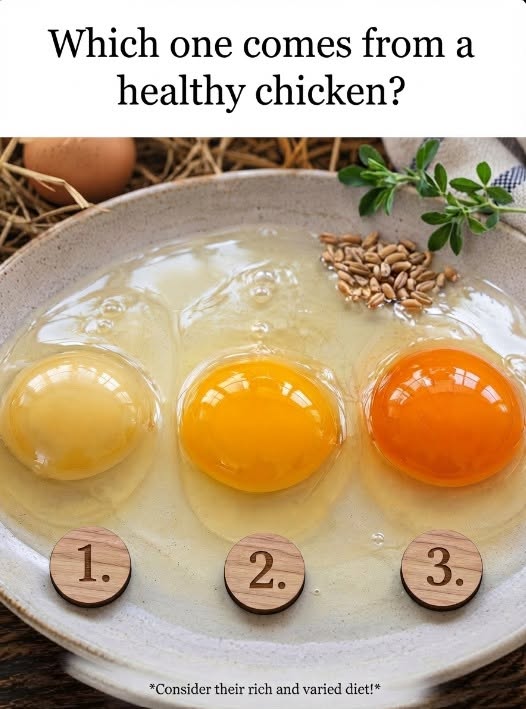
Yes, an orange yolk is not inherently a warning sign.
Yolk color can naturally range from pale yellow to deep orange.
What matters for food safety is proper handling, refrigeration, cooking, and the condition of the egg—not whether the yolk is yellow or orange.
And please don’t assume that a beautiful golden yolk means an egg can be handled carelessly.
It can’t.
How to Get Beautiful Golden Yolks at Home
Here’s the part that might surprise you:
If you’re raising chickens, diet is one of the biggest factors you can influence when it comes to yolk pigmentation.
A balanced layer diet should be the foundation.
If hens have access to appropriate greens and other feed sources containing natural pigments, those foods may influence yolk color.
But this isn’t a reason to start randomly feeding chickens unusual foods.
Their nutritional needs are specific, and their primary diet should be appropriate for laying hens.
If you’re not raising chickens?
Well, your job is much easier.
Go find eggs from a producer whose farming practices and labeling you trust.
Then crack one open and see what you get.
My Favorite Way to Cook a Golden-Yolk Egg
After all this investigation, I couldn’t just scramble those eggs and call it a day.
Well…
Actually, I did.
And they were delicious.
For simple scrambled eggs, whisk together:
- 2 large eggs
- 1 tablespoon milk or cream
- A pinch of salt
- A little black pepper
Melt a small pat of butter in a skillet over medium-low heat.
Pour in the eggs and let them sit briefly before gently stirring.
Keep the heat moderate and take them off the stove while they’re still soft and creamy.
The residual heat will finish the job.
Pile them onto warm toast and sprinkle with fresh chives.
Nothing complicated.
Nothing fancy.
Just breakfast.
And sometimes that’s exactly what you want.
What I Learned From That One Egg
That strange little orange yolk sent me down a surprisingly deep rabbit hole.
I started out thinking I had discovered some secret category of super-egg.
Instead, I learned something much more useful.
The color of an egg yolk is a clue—not a complete story.
It can tell us something about pigmentation and the hen’s diet.
It can make breakfast look absolutely gorgeous.
It may even coincide with differences in certain nutrients or flavor depending on how the egg was produced.
But yolk color cannot tell us everything about the hen’s welfare, the egg’s nutritional value, or whether it was produced according to a particular farming standard.
For those questions, the carton—and ideally information from the producer—is much more useful.
Frequently Asked Questions About Golden Egg Yolks
Why is my egg yolk orange instead of yellow?
The most common explanation is the hen’s diet. Pigments called carotenoids can influence yolk color, producing shades ranging from pale yellow to deep orange.
Are orange egg yolks healthier?
Not necessarily. A darker yolk can contain higher levels of certain pigments depending on the hen’s diet, but color alone does not establish that the entire egg is more nutritious.
Do orange yolks mean the chickens were free-range?
No. Yolk color cannot reliably tell you how a hen was housed. Feed can significantly influence yolk pigmentation.
Do darker yolks taste better?
Some people prefer the flavor of eggs with darker yolks, but taste depends on several factors, including freshness, diet, and individual preference. Color alone doesn’t guarantee a richer-tasting egg.
Are pale yellow egg yolks bad?
No. Pale yolks can be perfectly normal and safe to eat.
Can chickens’ food change yolk color?
Absolutely. The pigments present in a hen’s diet can influence the color of the yolk.
What color should a healthy egg yolk be?
There isn’t one single “correct” yolk color. Normal yolks can range from pale yellow to orange.
Can I eat a very dark orange yolk?
Yes, provided the egg is fresh, properly handled, and cooked according to appropriate food-safety practices. Dark color itself isn’t a reason to avoid the egg.
The Bottom Line
That one golden-orange egg completely changed the way I look at breakfast.
Not because it turned out to be some magical superfood.
It didn’t.
It simply reminded me that there is a whole story behind the food we casually crack into a frying pan every morning.
The hen’s diet can influence the color of the yolk. Farming and production practices can vary. Labels can tell us things that appearance cannot. And a beautiful orange yolk is certainly fun to see—but it isn’t a nutritional scorecard.
So the next time you crack open an egg and find a yolk the color of sunshine?
Pause for a second.
Take a picture if you’re like me.
Then cook it.
Because whether it’s pale yellow or deep golden orange, there’s something pretty wonderful about turning such a simple ingredient into breakfast.
And yes…
I still get a little excited when I crack open a really golden one.
Maybe it’s because now I know there’s a story hiding inside that shell.
