The Hidden Powers of Rosemary Bush – And Why You Should Plant It by the Door
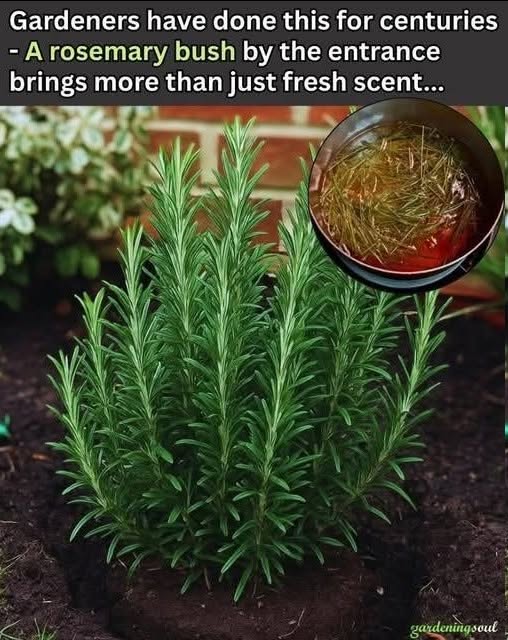
Few plants carry as much history, symbolism, beauty, and practical usefulness as rosemary.
With its fragrant evergreen leaves, delicate blue flowers, and distinctive aroma, rosemary has earned a timeless place in gardens and kitchens around the world. But for centuries, this Mediterranean herb represented much more than a flavorful ingredient.
Rosemary became associated with protection, remembrance, loyalty, hospitality, and vitality. In many traditions, planting it near a doorway was believed to protect the household while welcoming guests.
Today, rosemary remains just as useful—whether you’re growing it for cooking, enjoying its fragrance, or simply appreciating its connection to centuries of tradition.
A Plant With an Ancient History
Rosemary is native to the Mediterranean region, where it thrives in sunny, dry, rocky environments.
Its scientific name was traditionally given as Rosmarinus officinalis, although modern botanical classification places rosemary in the genus Salvia. The traditional name rosmarinus comes from Latin and is commonly interpreted as meaning “dew of the sea,” an appropriate description for a plant closely associated with Mediterranean coastlines.
For thousands of years, rosemary has appeared in cultural, culinary, medicinal, and religious traditions.
Rosemary in the Ancient World
Different civilizations attached their own meanings to the plant.
-
Ancient Egyptians are believed to have used rosemary in funerary practices.
-
Ancient Greeks associated rosemary with memory and sometimes wore it during important occasions.
-
Romans used rosemary in religious ceremonies and associated it with remembrance and protection.
-
Medieval Europeans used rosemary in household traditions and regarded it as a protective herb.
Over time, these associations helped transform rosemary from an ordinary Mediterranean shrub into a plant rich in symbolism.
Why Was Rosemary Planted by the Door?
The location of the plant was significant.
A doorway represents a transition between the outside world and the home. In traditional folklore, placing rosemary near this threshold gave the plant a symbolic role as a guardian of the household.
Protection
Rosemary was traditionally believed to protect homes from negative influences, misfortune, and harmful spirits.
Its evergreen nature may have strengthened this symbolism. Unlike plants that disappear during winter, rosemary can remain green throughout the year in suitable climates.
Hospitality
Rosemary was also associated with welcoming guests.
A plant growing beside the entrance could release its distinctive fragrance whenever someone brushed against it. This made the doorway smell fresh while creating a natural and memorable welcome.
Memory and Remembrance
Perhaps rosemary’s most enduring symbolic association is with memory.
The herb has long been connected with remembrance of loved ones, ancestors, and important events. This association appears in various European traditions and continues to influence how rosemary is used in ceremonies today.
Love and Fidelity
Rosemary also became associated with loyalty and faithfulness.
Historically, it was sometimes incorporated into wedding ceremonies, bouquets, and decorations, where it represented remembrance, love, and lasting commitment.
Good Fortune
In some traditions, rosemary was regarded as a lucky or protective plant. Growing it near the entrance therefore carried the symbolic idea of inviting positive things into the household while keeping misfortune away.
These beliefs belong to folklore and cultural tradition rather than established scientific fact. Nevertheless, they help explain why rosemary has remained such a meaningful garden plant.
Rosemary and Health: What Science Says
