What the Fuzzy White Coating on Baby Carrots Really Is (And Why You Shouldn’t Toss Them)
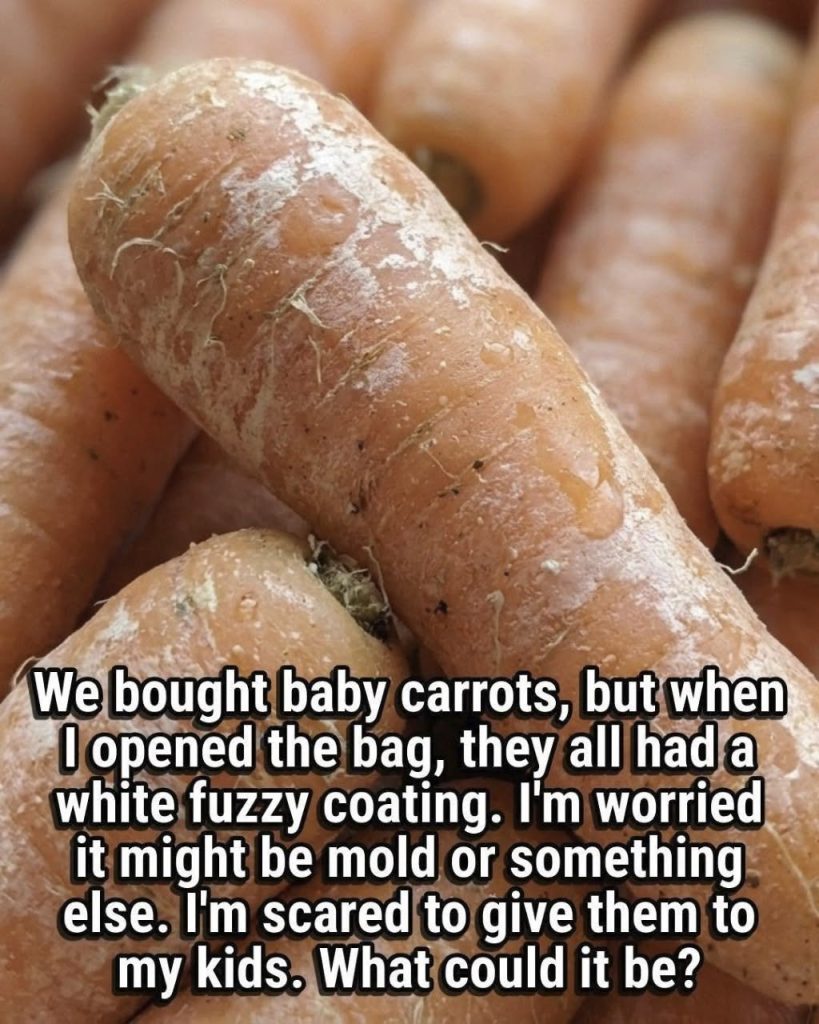
Carrot Blush vs. Mold: How Can You Tell?
Here are some useful signs to look for:
| Carrot Blush | Possible Mold/Spoilage |
|---|---|
| White or pale, chalky appearance | Green, blue, black, or other unusual mold colors |
| Dry or powdery surface | Fuzzy, wet, slimy, or spreading growth |
| Carrot remains firm | Carrot becomes soft or mushy |
| Little or no unusual smell | Musty, sour, fermented, or unpleasant odor |
| White appearance may improve after rinsing | Growth may remain or continue spreading |
| Carrot otherwise looks fresh | Other signs of deterioration are present |
The Important Rule
If the carrot has a dry, whitish film but is still firm, smells normal, and otherwise looks fresh, the appearance may simply be carrot blush.
You can rinse the carrots under cool running water and inspect them carefully.
However, if you see true fuzzy growth, unusual colors, sliminess, soft or rotten areas, or an unpleasant smell, it’s safer to discard the affected carrots.
When in doubt—especially when serving young children—don’t take chances with questionable produce.
How to Prevent Baby Carrots From Developing White Blush
Fortunately, there are several simple ways to keep baby carrots looking fresh for longer.
1. Keep Them Moist—But Not Wet
Because dehydration is one of the main reasons carrot blush develops, keeping the carrots from drying out can help.
Store baby carrots in their original packaging if it is designed for produce storage, or place them in a clean container or resealable bag.
Avoid leaving the bag open in the refrigerator for days.
At the same time, excess moisture can encourage spoilage, so you don’t want the carrots sitting in a pool of water.
2. Store Them in the Refrigerator
Baby carrots should be refrigerated rather than left at room temperature.
The refrigerator slows down moisture loss and helps maintain their texture and freshness.
3. Check for Excess Water
If condensation builds up inside the bag or container, remove excess moisture and use a clean, dry container or paper towel as appropriate.
The goal is to maintain a good balance: prevent excessive drying without creating a constantly wet environment.
4. Keep Them Away From Spoiled Produce
One soft or spoiled carrot can make the rest of the bag deteriorate more quickly.
When you bring carrots home, check the bag and remove any carrots that are already damaged, leaking, very soft, or showing obvious signs of mold.
5. Consider Buying Whole Carrots
If you regularly find that baby carrots develop white blush before you have a chance to eat them, whole carrots may last better for your shopping habits.
Whole carrots still have their natural outer skin, which provides additional protection against moisture loss.
Can You Still Eat Carrots With White Blush?
If the carrots are otherwise fresh and the white appearance is simply dehydration, the carrots can generally still be used.
Give them a thorough rinse and check their texture and smell. They may not look as attractive as freshly purchased carrots, but the white blush itself is not necessarily an indication of spoilage.
You may also notice that the carrots regain some of their bright appearance after being rinsed or rehydrated.
However, don’t rely on rinsing to make spoiled carrots safe. If you see actual mold or the carrots are slimy, soft, rotten, or smell unpleasant, discard them.
The Bottom Line
The next time you open a bag of baby carrots and notice a strange white coating, don’t panic immediately.
In many cases, that pale appearance is simply carrot blush caused by moisture loss, which is especially common in peeled baby carrots.
The key is to inspect the carrots carefully. Firm, fresh-smelling carrots with a dry white coating may simply need a rinse, while carrots with fuzzy mold, slime, unusual colors, soft spots, or an unpleasant odor should be thrown away.
So before tossing an entire bag of baby carrots into the trash, take a closer look. That mysterious white coating may be nothing more than a sign that your carrots have lost a little moisture.
